
- Bearings
 Vertical Bearings
- AV Series
AV
LV SeriesLV
MV SeriesMV
V SeriesV
 Horizontal Bearings
- HD Series
HD
IH SeriesIH
 Tilting Pad Bearings
 Journal Bearings
- Journal Pad Units
Journal
 Thrust Bearings
- SE Series
SE
Omega EqualisedOmega
OmegaOmega
 Marine Bearings
- Marine Gearbox InternalsHome > Media Centre > From Apprentice to Production Manager: Building a Career at Michell Bearings
Categories
View By:
From Apprentice to Production Manager: Building a Career at Michell Bearings
Posted: 10th February 2026
 < Back to Media Centre
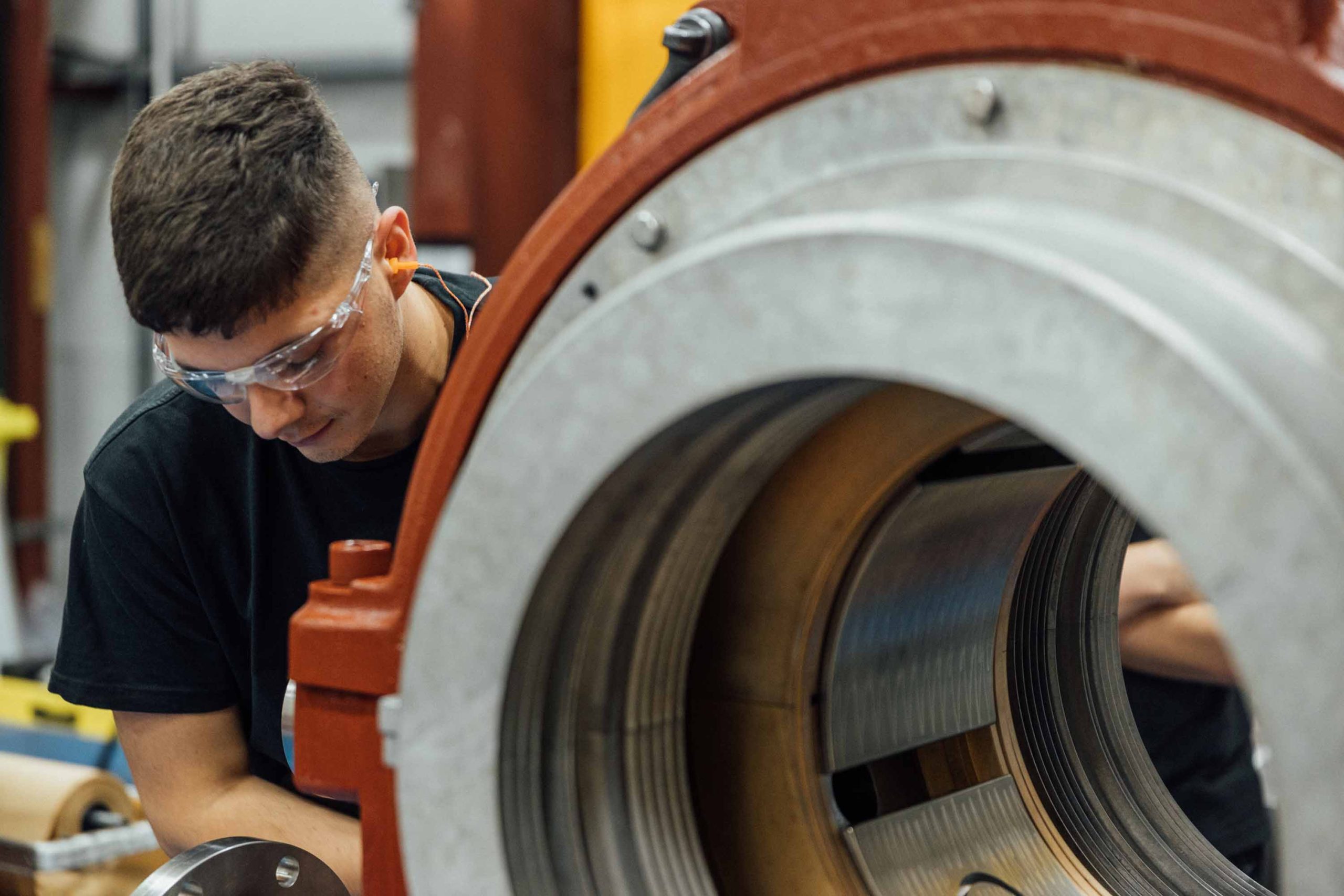
National Apprenticeship Week is an annual celebration of apprenticeships, bringing together employers, apprentices and training providers from across the UK to showcase the positive impact apprenticeships have on individuals, businesses and the wider economy.
To mark the occasion and celebrate our apprentices, we caught up with Steve, a Production Manager at Michell Bearings. Steve began his career as an apprentice Hydraulic Fitter at Alstec in 2001 and joined Michell Bearings in 2009 as a Fitter. Through continued development and hands-on experience, he progressed into leadership roles and became Assembly Lead before progressing into his current role as Production Manager last year.
We spoke to Steve about his apprenticeship journey and how it has helped shape his career to date…
When did you join Michell Bearings?
I initially joined on a temporary contact via an agency in 2009 but became a permanent employee in March 2010.How did you progress from Fitter to your current role?
After working as a Fitter for a couple of years, I applied for what was effectively a senior or team-leader-type role at the time. The structure was changing and the business supported me through a leadership degree through evening classes.Over time, I worked across service, site work and factory-based roles. In late 2014, I was asked to step into the Assembly Lead role, which I formally took on in January 2015. I later moved into the Production Manager role last year.
What attracted you to doing an apprenticeship?
Family influence played a big role. I come from a long line of people who worked in manufacturing and engineering. University and the academic route didn’t really appeal to me, so it felt like the most natural and practical path for me.What was your apprenticeship like on a day-to-day basis?
It was very hands-on and well-rounded. I worked in a small unit, just myself, a supervisor and a manager, so I got involved in everything.That included stripping, cleaning, assessing and repairing equipment, writing customer reports, packing, organising transport and even producing drawings. It gave me exposure to the full lifecycle of the work, not just one specific task.
What kind of equipment were you working on during your apprenticeship?
I worked on hydraulic and refuelling equipment used by ships that operate for long periods at sea. The equipment allows vessels to refuel without returning to port, so reliability was critical.Did your apprenticeship involve studying alongside work?
It followed a very similar structure to current apprenticeship schemes. I spent the first six months full-time at college, then moved into a day-release model while working full-time.
It was manageable, especially at that age, but it does require discipline.How did you personally manage studying alongside full-time work?
I’ve always been a last-minute person, but I know my limits. I never miss deadlines, but I often worked right up to them.When I later completed my leadership degree, I did most assignments over weekends or while working away in hotels. It was intense at times, but it worked for me.
Are there any qualifications you’re particularly proud of achieving?
Completing my apprenticeship is the one I’m most proud of. I’m very passionate about apprenticeships because they’re challenging. You’re balancing work, college, assessments and NVQs over several years.Completing a degree on top of that, while working full-time, was also a big achievement.
How do you feel your apprenticeship prepared you for long-term success?
An apprenticeship instils discipline and accountability early on. You’re responsible for your work, your studies and your deadlines – so there’s no hiding.It also helps bridge the gap between school and work, with lecturers who often have real industry experience, which makes the transition easier.
Where do you see your career heading in the future?
I don’t believe in putting limits on a career. I’m always open to taking on more responsibility, training, or new challenges.I enjoy learning, even though it’s difficult to balance alongside full-time work, and I believe continuous development is important.
What advice would you give to someone considering an apprenticeship?
I would strongly recommend it! Apprenticeships provide real skills, long-term job security and good earning potential.They also open doors. I’ve travelled the world through work, which wouldn’t have happened without my apprenticeship.
What would you say to someone who isn’t sure whether an apprenticeship is right for them?
Reach out to companies and ask for work experience. Spend time in a factory, talk to people doing the job and see what it’s really like.We’ve had apprentices come to Michell Bearings who have done exactly that. They came in with no background but curiosity and honesty, and it made all the difference.
If you’re considering an apprenticeship, National Apprenticeship Week is the perfect time to explore what’s on offer ahead of apprenticeships open later in the year. Find out more about the British Engines apprenticeship scheme.
Michell Bearings
Waldridge Way,
Simonside East Industrial Park,
South Shields,
NE34 9PZ.© Michell Bearings.
Registered Office Address: 11 Glasshouse Street, St Peter's, Newcastle upon Tyne. NE6 1BS. Company registered in England and Wales no. 9390648
 PTFE Bearings
 Get Directions